Choose WordPress when your website is mostly content and standard features: pages, articles, a contact form, an online store. Choose custom development when the website has to follow a process that is specific to your organisation, such as registrations with approval steps, a dashboard fed by your own data, or integration with a system you already run.
Most businesses need the first. Some need the second. A few need both, and that is a normal answer too.
What is the real difference?
WordPress is a ready-made content management system. The parts every website needs are already built: pages, menus, media, users, an editor your staff can learn in an afternoon. We design the site, build the theme and add the features you need on top.
Custom development means writing the software around your process. Nothing is assumed. We agree what the system must do, write a specification, and build it in stages on a framework such as Laravel.
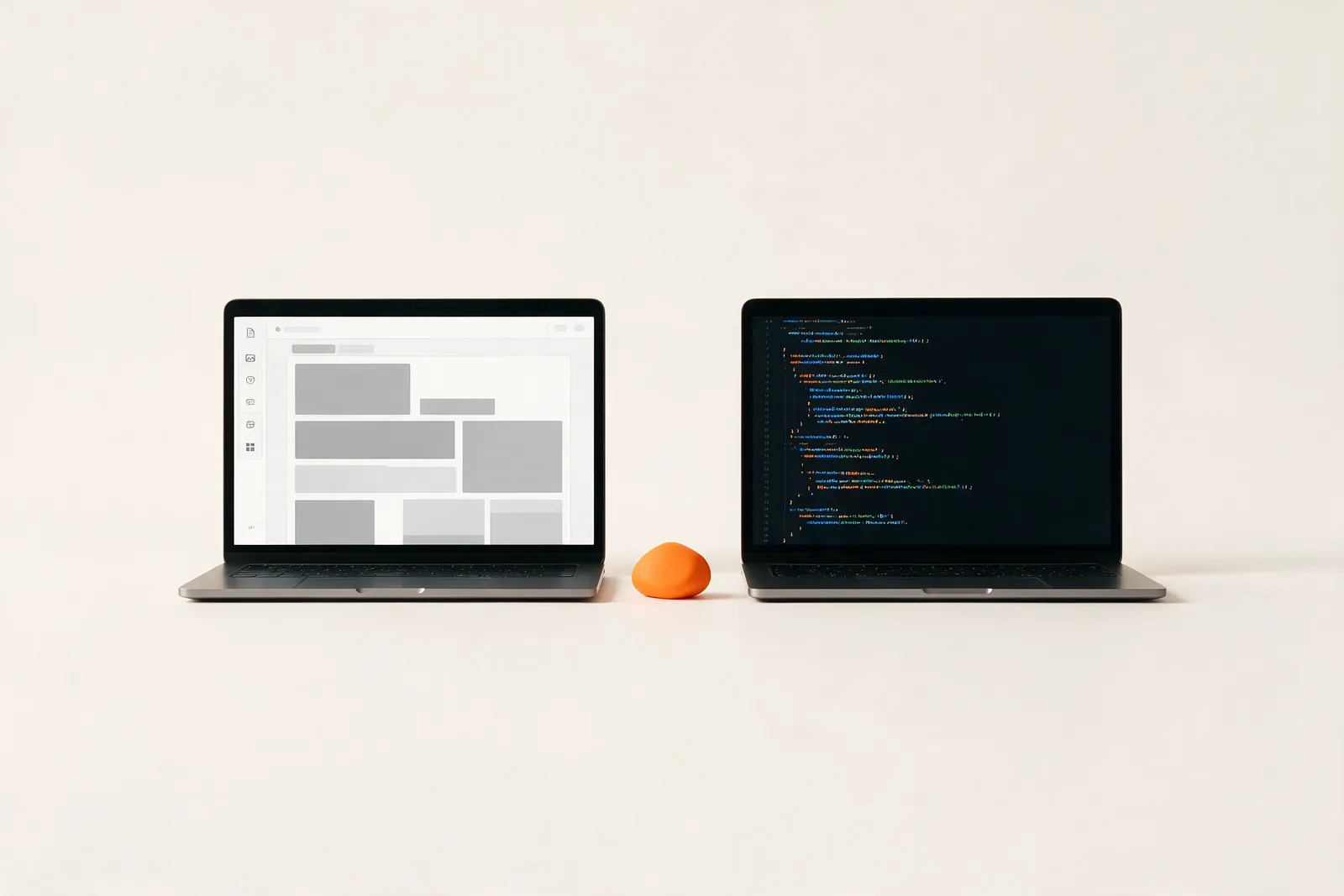
The difference is not quality. It is where the effort goes. With WordPress, the effort goes into design and content. With custom development, it goes into logic: who can do what, what happens next, what gets recorded.
When is WordPress the right choice?
WordPress is the right choice when the answers to these questions are mostly yes:
- Is the site mainly there to explain, persuade and collect enquiries?
- Will your own team add pages, articles or products regularly?
- Are the features you need common ones, such as forms, galleries, bookings or an online store?
- Do you want to be online in weeks rather than months?
A corporate website, a clinic site, a landing page for a campaign and a standard online store all fit here. So do many government portals, where the work is publishing information clearly and keeping it accessible.
When do you need custom development?
You need custom development when the website has to behave like a system rather than a brochure. The signs are usually these:
- A process with steps and roles. Applications that are submitted, checked, approved and paid for, by different people.
- Your own data, shown your way. Dashboards, reports or public data portals that draw on records you hold.
- Integration with systems you already use. Payment gateways, registration systems, internal databases or third-party APIs.
- Rules that no plugin covers. Pricing, eligibility or scheduling logic that is specific to you.
If you find yourself describing a workflow rather than a set of pages, you are describing custom development.
Is there a middle path?
Yes. Two of them are common.
The first is a custom WordPress build: WordPress for the content, with custom features written specifically for you instead of assembled from plugins. Your team keeps the familiar editor, and the unusual parts are built properly.
The second is headless WordPress: WordPress manages the content, and a separate front end, built with a framework such as Next.js, displays it. This suits sites that need a very fast, app-like front end while editors still work in WordPress.
Both cost more than a standard WordPress site and less than a full custom system.
How do the costs compare?
From our 2026 rate card:
| Route | Starting price |
|---|---|
| Corporate website on WordPress | from RM5,500 |
| E-commerce on WordPress | from RM6,500 |
| Custom WordPress build | from RM12,000 |
| Custom web app or portal | quoted per project |
Custom work is quoted after a discovery session, because the cost follows the process you need built, and that differs for every organisation. You get a written quotation before any work starts.
What should you ask yourself before deciding?
Three questions settle most cases:
- Can you describe the site as a list of pages? If yes, WordPress. If you need a flowchart, custom.
- Who will update it, and how often? If non-technical staff update it weekly, an editor they can use matters more than anything else.
- What already exists? If the site must talk to a system you run today, say so at the start. It changes the scope more than any design decision.
If you are unsure, start with the smaller option. A WordPress site that works can grow custom features later. A custom system built on guesses is expensive to change.
FAQ
Is WordPress only for small websites?
No. WordPress runs large corporate sites, online stores and government portals as well as small brochure sites. What matters is whether the site is mainly content and standard features, not how big the organisation is.
Is a custom-built website more secure than WordPress?
Not automatically. A well-maintained WordPress site with updates, backups and security hardening is safe to run. A custom system that nobody maintains is not. Security comes from the upkeep, on either route.
Can we start on WordPress and move to a custom system later?
Yes, and it is often the sensible order. Start with WordPress to get online and learn what your customers actually do, then build the custom parts once the process is proven.
How much more does custom development cost?
Our corporate WordPress websites start from RM5,500 and custom WordPress builds from RM12,000. Web applications and portals are scoped after a discovery session and quoted per project.